01 · Setup
Hull straight from Rhino
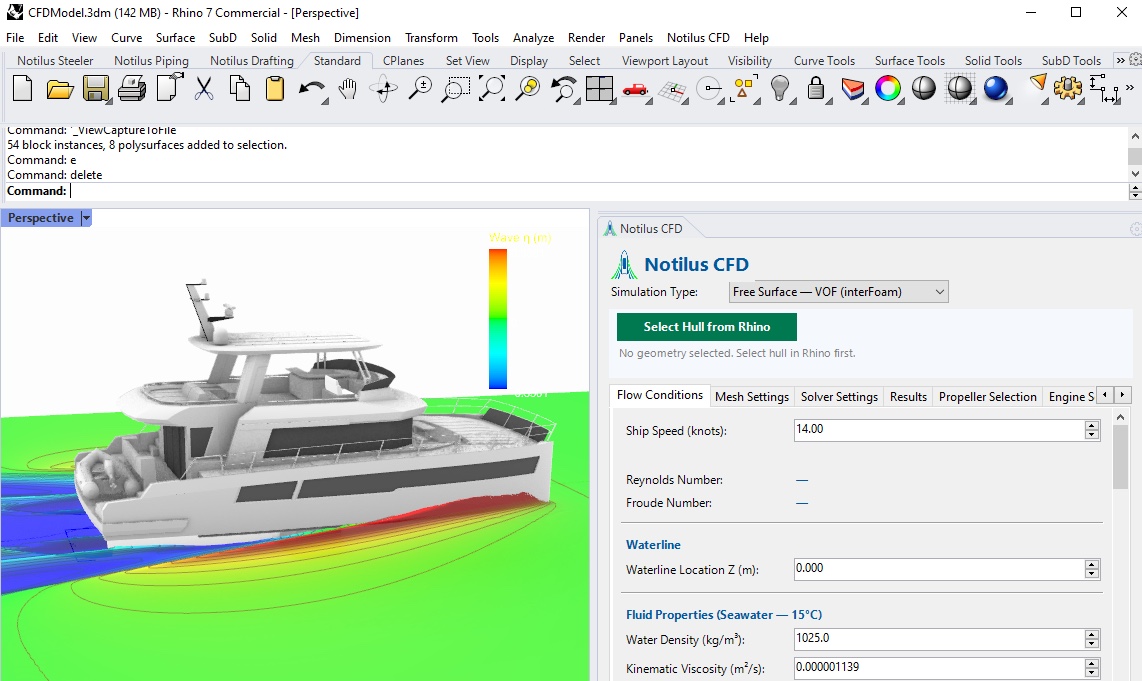
Pick the hull surface, give it a draft and a speed range, and get results for the hull you actually designed.
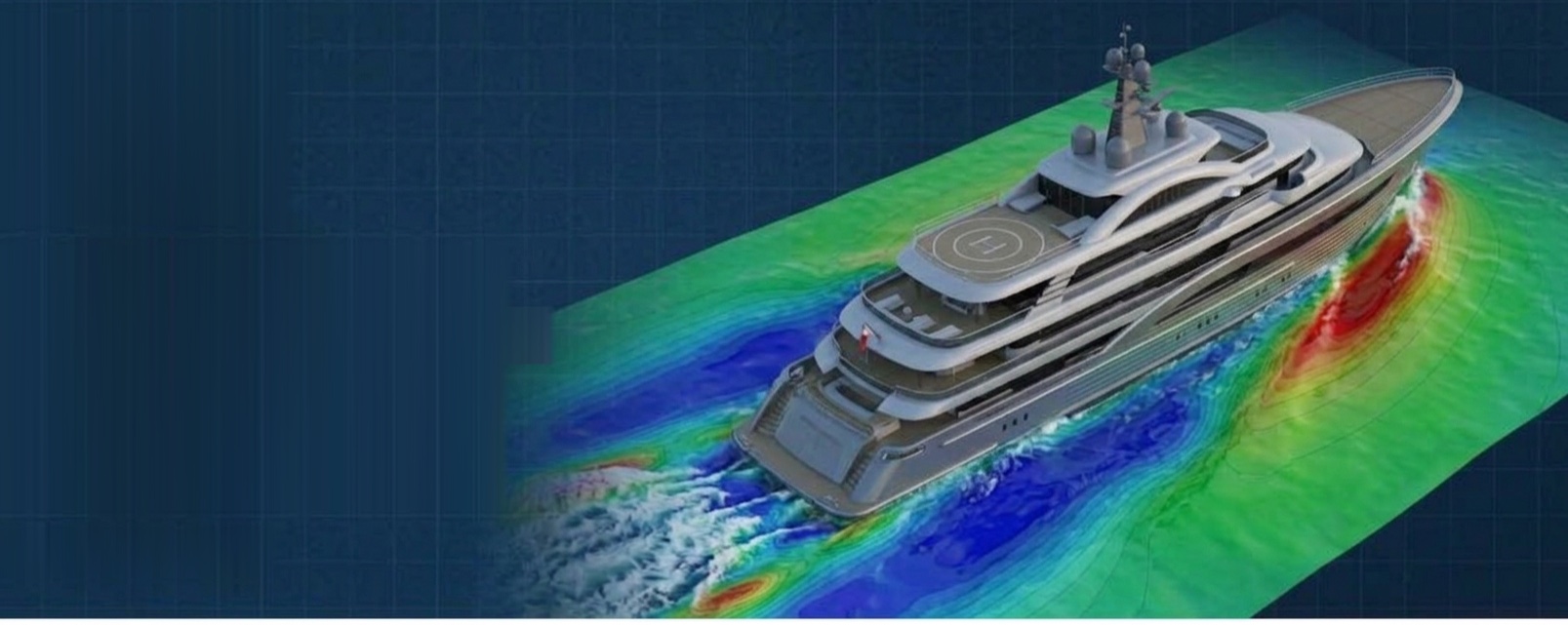
Resistance curves, wave patterns, hull pressure maps, running trim and a first propeller match — every result delivered on your own hull model, inside Rhinoceros.
Pick the hull surface, give it a draft and a speed range, and get results for the hull you actually designed.
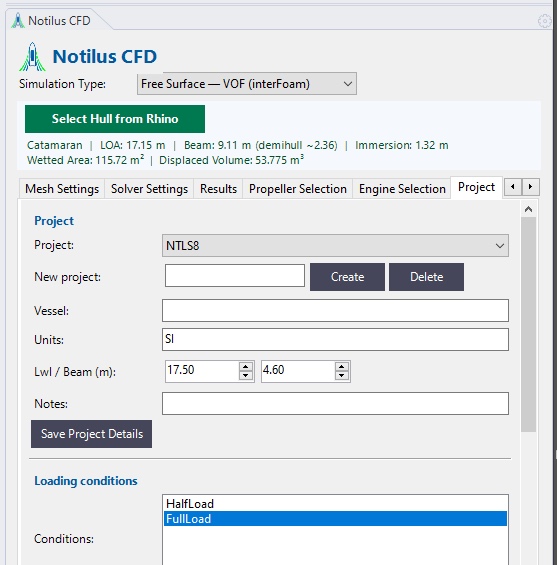
Vessel, units, main dimensions, notes and loading conditions are saved with the project, so every run starts from the same data — half load and full load side by side.
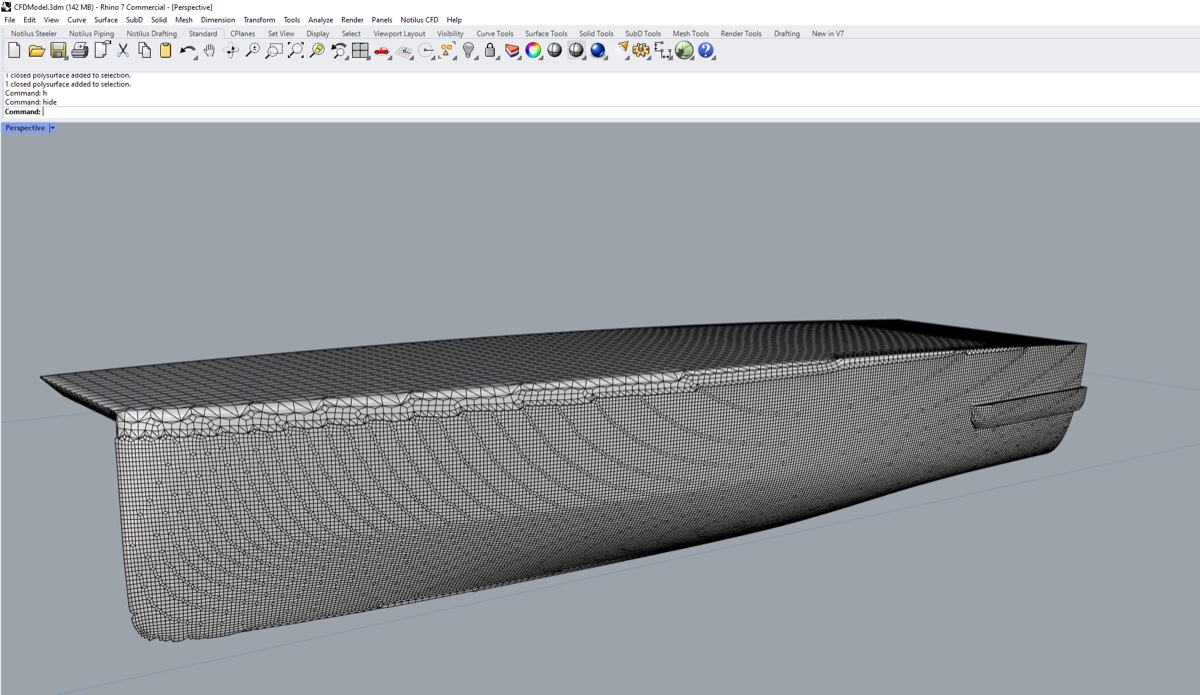
Tight chines, spray rails and hard flare are captured as drawn, so every number reflects the real shape of the hull.
Every speed in the range becomes a full calm-water result, with wave-making and viscous resistance taken from the actual flow around your hull.
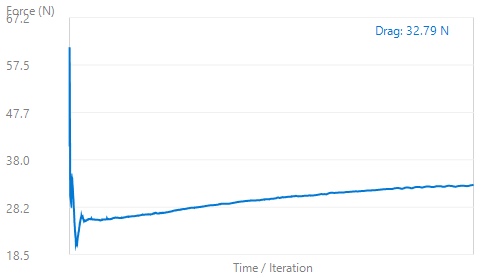
Pressure and friction force histories plotted while the run is still going, so you can tell a converged answer from a wandering one at a glance.
Total resistance built up speed by speed and split into pressure and friction components — the curve a hull decision actually rests on.
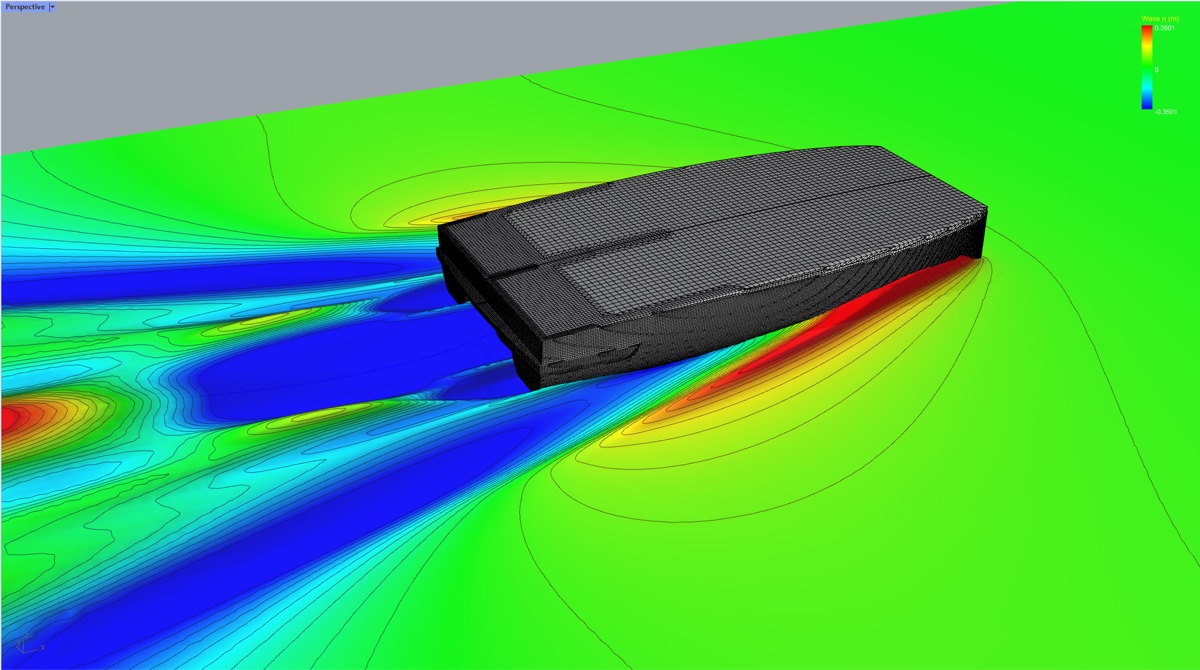
Free-surface elevation and the Kelvin wake shown in Rhino as a mesh you can rotate, section and put in a client presentation.
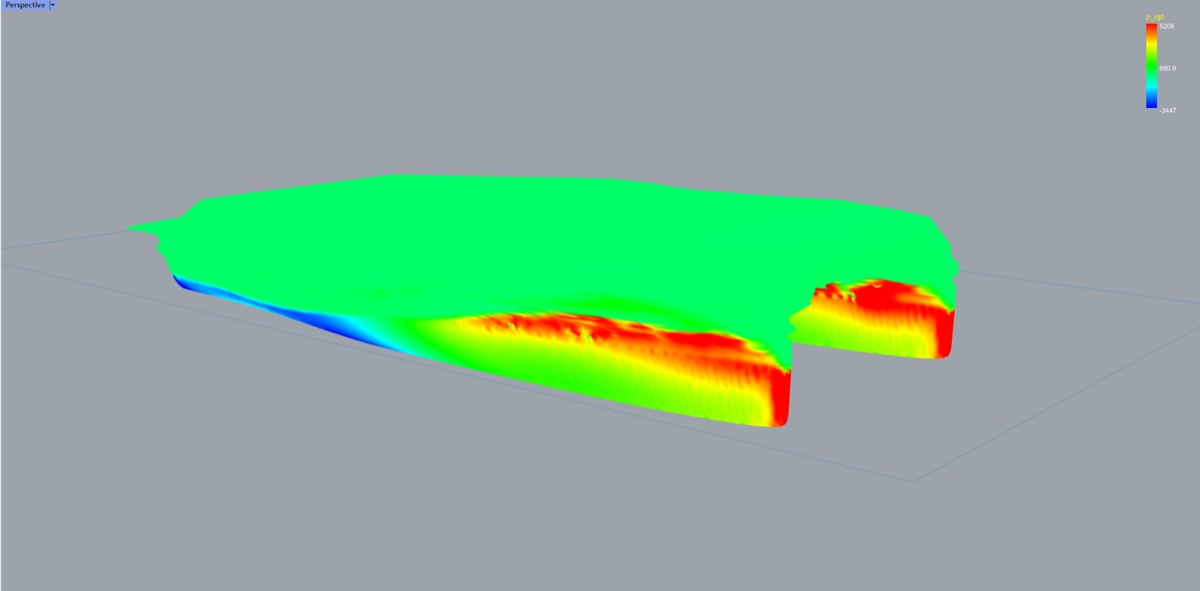
Pressure distribution baked onto the hull surface. Spot the slam-prone forward sections, separation behind a hard chine, and where the shape is fighting the water.
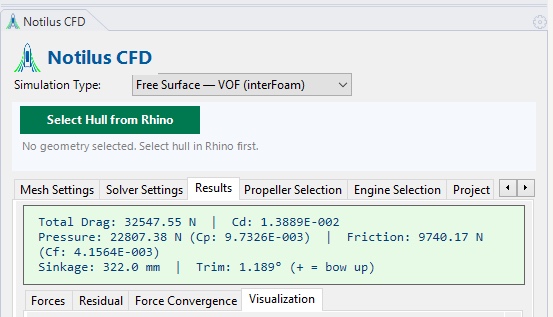
Running trim and sinkage at every speed — an indication of how the hull will actually sit under way.
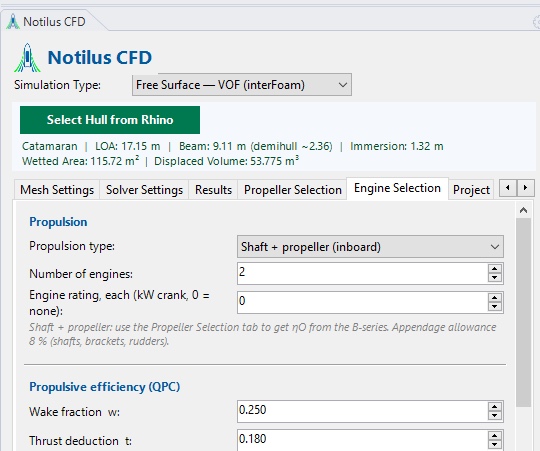
Set the propulsion type, the number of engines and their rating, then the wake fraction and thrust deduction that go into the propulsive efficiency.
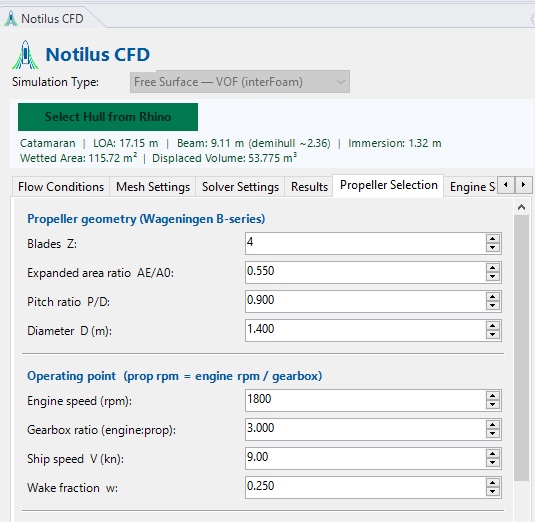
A Holtrop-Mennen estimate sits beside every run, and Wageningen B-series open-water curves turn the resistance number into a first propeller pick.
A full walkthrough on a real hull is being recorded. In the meantime, see the rest of the suite in action on our YouTube channel.
Pick the hull surface you designed and set a draft and speed range. No export, no remodelling.
Chines, spray rails and flare are captured as drawn, on a mesh tuned for marine hulls.
Resistance, wave pattern, hull pressures and running trim across the whole speed range.
Engine settings and Wageningen B-series propeller curves turn the resistance numbers into a first propeller pick.
A 15-day evaluation license is issued by the engineering team. Tell us about the vessel and the plugins you'd like to try — we reply within one working day.
Notilus CFD is part of an end-to-end marine engineering toolset. These plug-ins pick up the hull once its hydrodynamics are settled.